Garage Heaters in Saskatoon and Surrounding Area
Unit heater installation, replacement and repair — forced-air and low-intensity radiant tube, sized with a heat-loss calculation and commissioned for a −40°C prairie winter.
A cold garage is a solved problem.
Whether it is a double garage you want to keep at 10 °C so the vehicles start and the paint does not freeze, or a working shop you need comfortable at 16 °C all day, the answer is a properly sized unit heater — installed, vented and commissioned to the manufacturer's specification.
We install and repair both forced-air unit heaters and low-intensity radiant tube heaters, and we will tell you plainly which one suits your space. Our technicians are not paid commission, so nobody here is trying to sell you a bigger heater than your garage needs.
Installations and replacements come with a free written estimate. Diagnostic charges apply to service and repair calls — you receive a firm written price after diagnosis and before repair work begins.
Radiant, forced air, or electric
Three ways to heat a garage or shop. The right answer depends on your building — not on what we happen to stock.
Forced-air unit heaters
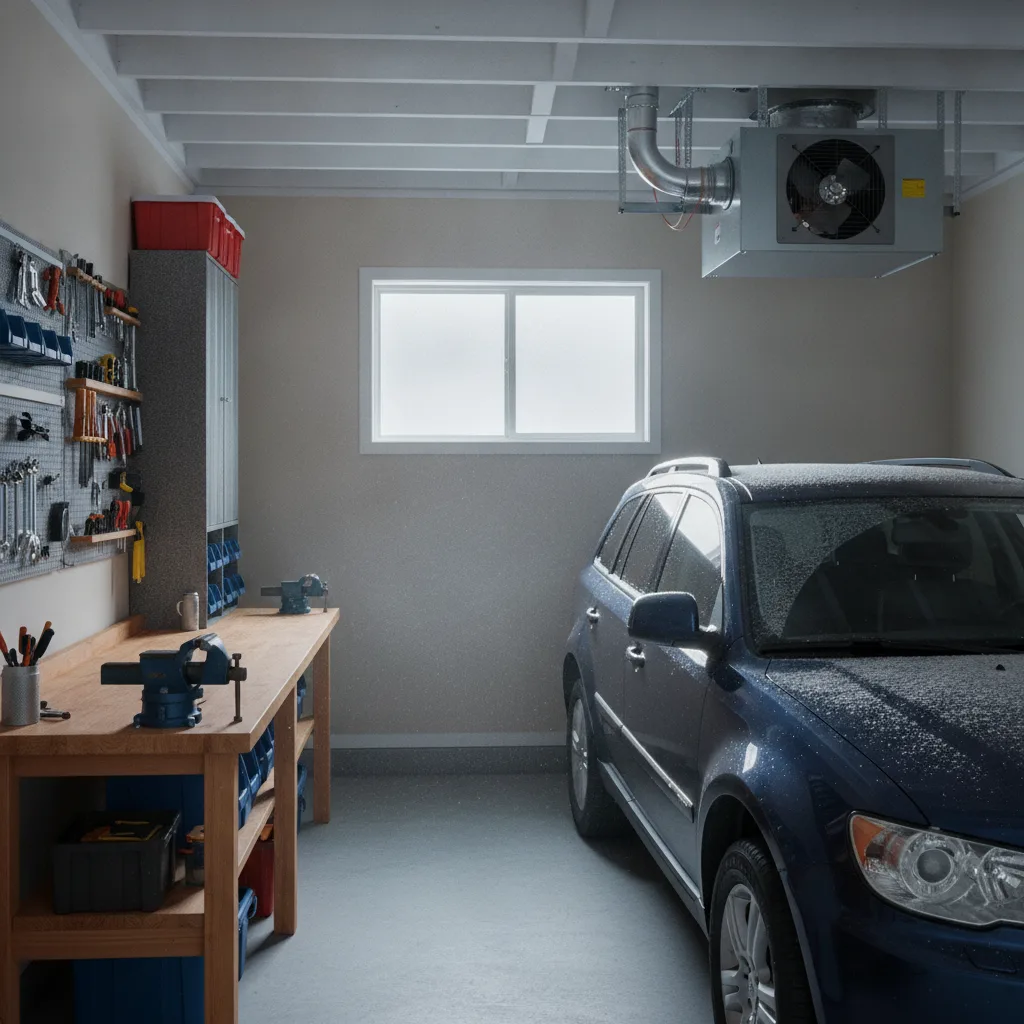
The classic ceiling-hung garage heater. A gas burner and fan push warm air across the space — fast recovery, lowest install cost, ideal for a garage you heat on demand.
Best for: attached or insulated garages, quick warm-ups
Low-intensity radiant tube heaters
Radiant tubes warm floors, tools and vehicles directly instead of heating the air. Quieter, no fan draft, and comfort returns quickly after the overhead door closes.
Best for: workshops, high ceilings, doors that open often
Electric & ductless options
No practical gas run? An electric unit heater or a cold-climate ductless head can heat — and in the ductless case, cool — a garage, hobby shop or detached studio.
Best for: detached garages without gas service
What a garage heater job includes
Sizing done properly
A heat-loss calculation for the actual space — volume, insulation, door type and target temperature — before anyone quotes equipment.
Install & replacement
Mounting, gas line extension, venting, electrical, thermostat and full commissioning — with a free written estimate before we start.
Repair & service
Igniters, flame sensors, gas valves, thermocouples, limit switches, fans and thermostats. Diagnostic charges apply to repair calls.
Safety & CO testing
Venting inspection, combustion air check, and carbon monoxide readings on entry and exit — every visit, not just on request.
Signs your unit heater needs service
Every symptom on its own line — if you recognize one of these, book a diagnostic.
- Heater runs but the garage never gets warm
- Unit ignites, then shuts down after a minute or two
- Burner will not light or the pilot keeps dropping out
- Loud rattle, grinding or squeal from the fan
- A smell of gas, or soot around the vent or cabinet
- Thermostat calls for heat and nothing happens
- Frequent short-cycling on and off
- Your CO alarm sounds when the heater runs
Smell gas or hear your CO alarm? Leave the space, ventilate it, and call us — our emergency line is answered 24/7.
Garage heater FAQs
What size garage heater do I need?
It depends on the garage's volume, insulation, door type and how warm you want to keep it — not on a rule of thumb. We do a heat-loss calculation for the space, so a 20 × 24 ft (6.1 × 7.3 m) insulated double garage gets a very different unit than an uninsulated triple. Undersizing means it never catches up on a −40°C night; oversizing short-cycles and wastes gas.
Radiant tube heater or forced-air unit heater — which is better?
Forced-air unit heaters warm the air quickly and cost less to install, which suits a garage you heat on demand. Low-intensity radiant tube heaters warm objects and floors directly, so they hold comfort better in a shop with a big overhead door that opens often, and they are quieter with no fan draft. We will tell you honestly which one fits your space and budget.
Can you heat my garage if there is no gas line out there?
Usually yes. We handle the gas line extension and venting as part of the install, or, where running gas is impractical, we can look at an electric unit heater or a cold-climate ductless heat pump head instead. That gets decided at the on-site estimate, not over the phone.
How much clearance does a garage heater need?
Follow the manufacturer's listed clearances — commonly 18 in. (46 cm) above and 6 in. (15 cm) to the sides for a forced-air unit heater, with more for combustibles under a radiant tube. We mount to the manufacturer's original specification first and confirm the venting termination clearances required by the Saskatchewan gas code.
My garage heater is running but not producing heat. Is that a repair or a replacement?
Often a repair — igniters, flame sensors, gas valves, thermocouples, limit switches and thermostats are all serviceable parts. Diagnostic charges apply to service and repair calls; once we have diagnosed the unit you receive a firm written price after diagnosis and before repair work begins, and you approve it first.
Is a heated garage safe to work in?
It is when the unit is vented and commissioned correctly. We check the venting, confirm combustion air, and test carbon monoxide levels on entry and exit. Never run an unvented construction heater in a closed garage, and keep a working CO alarm in any attached garage.
Ready to Get Comfortable?
Tell us about your garage or shop and we will size it properly — free written estimate on installs and replacements, firm written price after diagnosis on repairs.